Is it really a deal? How to spot a fake Black Friday sale
Not every Black Friday discount is what it looks like. Here are the most common ways a "deal" can mislead you, and six quick checks to tell a real bargain from a dressed-up price.
Black Friday is full of big red numbers. 50% off. 70% off. "Lowest price ever." It all feels like a once-a-year chance you'd be silly to miss.
Some of those deals really are great. But a lot of them are less impressive than they look, and a few aren't deals at all. The good news is that it only takes a minute or two to tell the difference, once you know what to look for.
Why Black Friday prices can be misleading
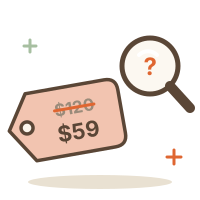
A discount is only as real as the price it's compared to. When a store shows "$120 $59," the whole deal depends on that $120. Was that what it usually sold for? Or is it a number that makes $59 look exciting?
Black Friday also packs a lot of pressure into a short time. When everything feels urgent, it's easy to skip the quick checks you'd normally do. That's exactly when a so-so price can pass for a bargain.
Signs a deal might not be what it seems
- A "was" price you've never seen. If the crossed-out price seems high, it might be a list price the item rarely sold for.
- A price that went up just before the sale. It's widely reported that some prices rise in the weeks before Black Friday, which makes the "discount" look bigger than it is.
- "Up to 70% off." "Up to" means a few things might be 70% off. Most things probably aren't.
- A model you can't find anywhere else. Some products, especially electronics, come in versions made for big sale events. They may not be identical to the regular model, so it's worth comparing the details.
- Bundles that hide the price. A "bundle deal" can include extras you didn't want, which makes the real discount hard to see.
- Doorbusters and countdowns. Tiny stock and ticking timers are designed to stop you comparing prices. Here's what those tricks are really doing.
6 quick checks before you buy
1. Know the regular price before the sale
This is the most useful thing you can do, and the easiest to do now. Write down what the things you want cost today, before Black Friday. Then on the day, you'll know instantly whether the sale price is really lower. It's the first step in your Black Friday game plan.
2. Check the price history
Free tools can show you how an item's price has changed over the past few months. On Google Shopping, many products show price insights: whether today's price is low, typical or high, and how it's moved recently. If you use Chrome, its Shopping Insights panel does something similar right on the product page. If the "sale" price is the same as it was in September, it's not much of a sale.
3. Compare a couple of stores
Search the exact product name or model number at two or three other stores. Black Friday deals are often matched elsewhere, and sometimes another store is simply cheaper.
4. Check the model number
If two products look the same but one is much cheaper, compare the model numbers and specs. Small differences, like less storage or a different material, can explain a big price gap.
5. Do the real math
Ignore the percentage and look at what you'd actually pay. Then ask: would I buy this at that price if there were no sale banner? And how often will I use it? The cost-per-wear rule is a great reality check. A cheap thing you'll barely use isn't a bargain.
6. Check the return policy
Holiday return windows are often longer, which is helpful. But some sale items are final sale. If you're not sure you want it, a strict return policy is a good reason to skip.
The best deal is something you already wanted
Here's the simplest rule of all: a real deal is a good price on something you already planned to buy.
If something wasn't on your list before Black Friday, a discount isn't a reason to add it. That's how "saving money" turns into spending more. Make your list first, with a simple Black Friday wish list, and let the sales come to you.
The short version
- A discount is only as real as the "was" price it's compared to.
- Watch for inflated "was" prices, "up to" claims, special sale models, confusing bundles and countdowns.
- Write down regular prices now, before the sales.
- Check price history and compare a couple of stores.
- Compare model numbers and do the real math.
- Check the return policy.
- The best deal is a good price on something you already wanted.
If you'd like an easy way to keep track, Favelist records the price when you save something, so you'll know what it cost before the sales started. Here's how it works.

Sharon